You've seen "M.O.T. Pediatrics" after Dr. Charu Arora's name and, reasonably, have no idea what it means. Indian professional credentials aren't always explained plainly to the people they're meant to reassure, and no parent should have to decode alphabet soup to understand who's treating their child.
Breaking down the letters
B.O.T. - Bachelor of Occupational Therapy. This is the entry-level undergraduate degree that qualifies someone to practise as an occupational therapist in India - a multi-year programme combining coursework with supervised clinical practice.
M.O.T. - Master of Occupational Therapy. This is a postgraduate degree, taken after a B.O.T., involving more advanced study and clinical training within a chosen area of occupational therapy practice.
Pediatrics - the specialisation. An M.O.T. can be pursued in different tracks depending on the institution - for instance, neurology, orthopaedics, or paediatrics. "M.O.T. Pediatrics" specifically means the postgraduate specialisation was in working with children: child development, paediatric conditions, and assessment and intervention approaches built for kids rather than adults.
Why the paediatric specialisation actually matters
Occupational therapy for a child and occupational therapy for, say, an adult recovering from a stroke fall under the same broad profession but are genuinely different fields in practice. A paediatric specialist has specifically studied how children develop, how sensory and motor systems build up through childhood, and how to work with a young child through play rather than instruction - a different skill set from adult rehabilitation. That's exactly why it's worth asking any occupational therapist you're considering whether they specialise in paediatrics: a general OT qualification alone doesn't guarantee that focus. Our guide to choosing the right OT for your child goes into this in more detail.
Where this fits at our practice
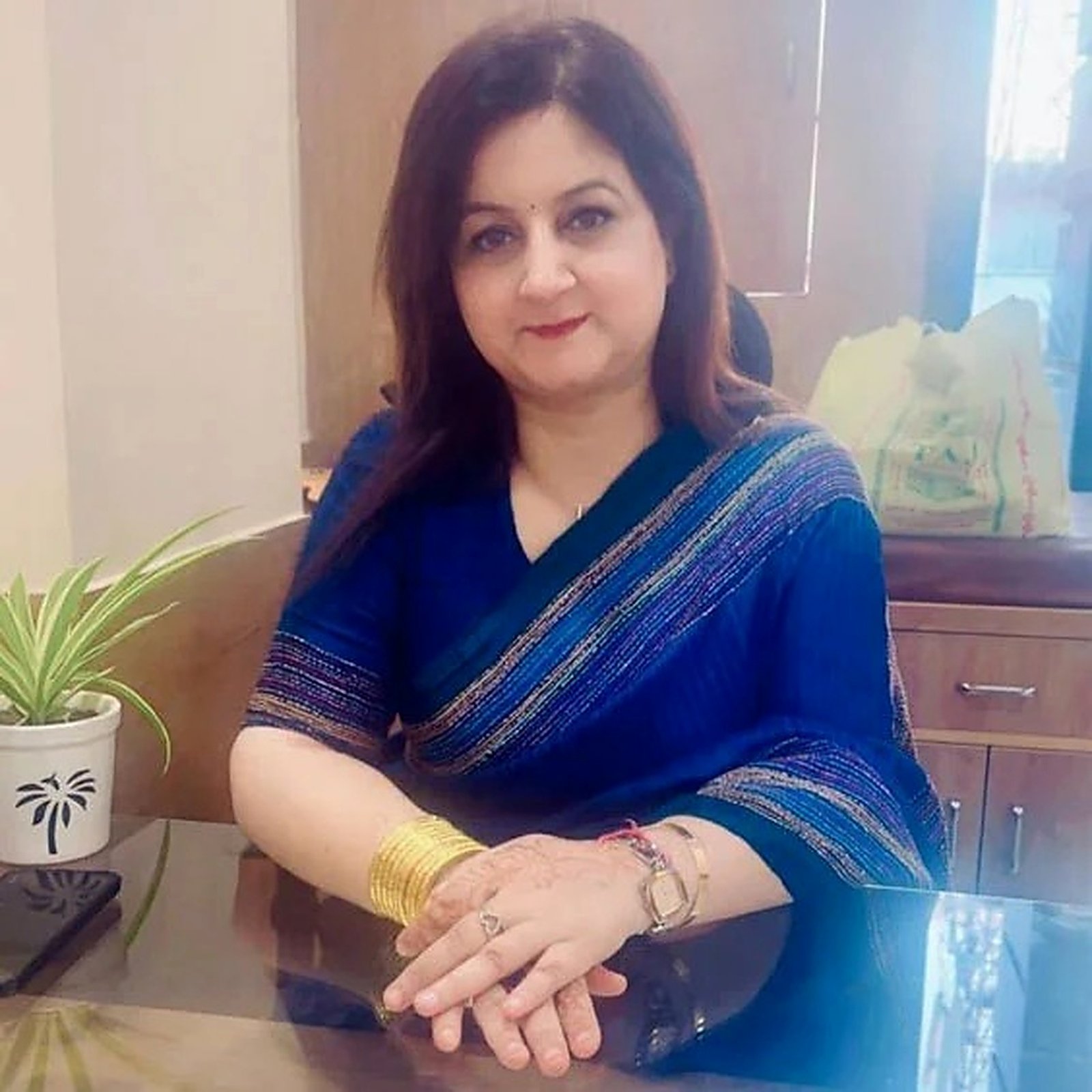
Dr. Charu Arora, who leads this practice, holds an M.O.T. in Pediatrics and also works as a Special Educational Needs Consultant. In practice, that means the focus here is built around children's development from the ground up, rather than being a general OT service that also happens to see kids.
A Special Educational Needs Consultant, in plain terms, is someone whose work also extends into how a child's needs are understood and supported in an educational setting - relevant when a child's difficulties show up as much in the classroom as they do at home. It's a separate line to the OT qualification itself, but it sits naturally alongside it, since so much of paediatric occupational therapy eventually touches how a child manages school.
What this means for your first visit
Whatever letters follow a therapist's name, the honest way to judge fit is the same: ask about their training, ask what a first assessment will actually cover, and notice how clearly they can explain it to you. Our first assessment page sets out exactly what to expect at ours.
Frequently Asked Questions
Is an M.O.T. more qualified than a B.O.T.?
An M.O.T. is a postgraduate degree taken after a B.O.T., involving further specialised study - but a B.O.T.-qualified therapist with substantial relevant paediatric experience can also be an excellent fit. The degree tells you the base training; experience and specialisation tell you the rest.
Does "Pediatrics" mean the therapist only ever treats children?
It means their postgraduate specialisation was specifically in paediatric occupational therapy - approaches to assessment and treatment built for children's development, rather than general or adult-focused OT.